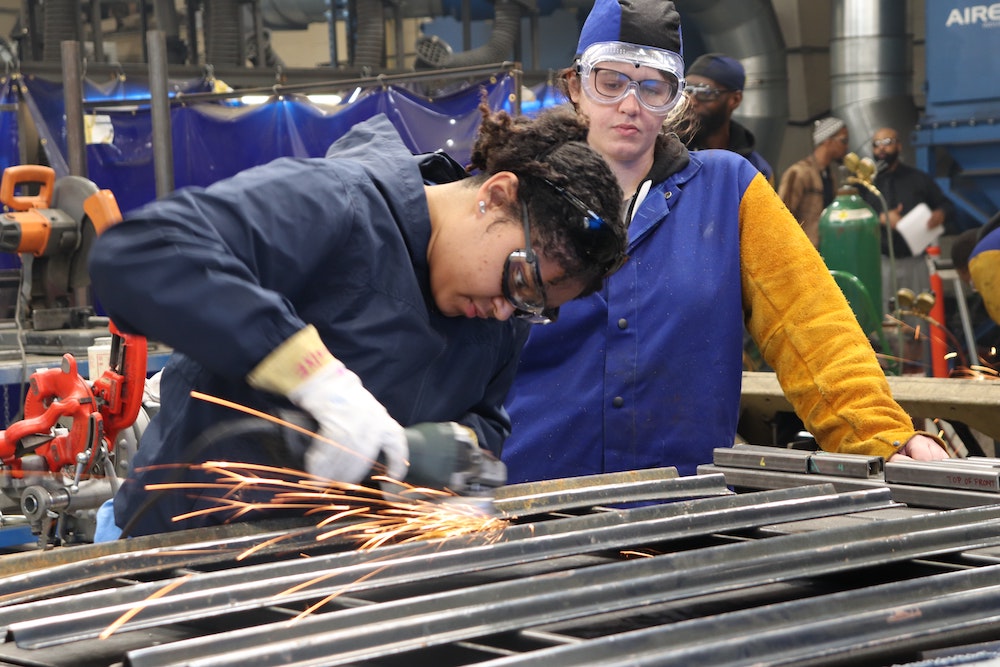
Two women welding. They are both wearing safety goggles and gloves.

CTP Program Brief: Vocational Rehabilitation (VR) Professionals

CTP Program Brief: Vocational Rehabilitation (VR) Professionals

Image of multiple students in caps and gowns, as well as two students in a classroom. The students are both in masks.

Kentucky Comprehensive Transition and Postsecondary Programs for Students with Intellectual Disabilities

Program Brief for Vocational Rehabilitation (VR) Professionals

As vocational rehabilitation professionals, our job is to empower individuals with disabilities to maximize their employment, achieve economic self-sufficiency and independence, and contribute to society. This includes doing all that we can to support the success of eligible consumers with intellectual disabilities enrolled in Kentucky Comprehensive Transition and Postsecondary Programs.
Cora McNabb, Executive Director, Kentucky Office of Vocational Rehabilitation

Comprehensive Transition & Postsecondary Programs (CTPs)

CTPs were created by the Higher Education Opportunity Act (HEOA, 2008). They support students with Intellectual Disabilities (ID) who want to continue academic, career, or technical instruction in higher education to better prepare for competitive integrated employment and independent living. CTPs:

  • utilize person-centered planning to help students identify and explore career goals, which may include paid work and non-paid work-based experiences
  • facilitate the social and academic integration of students on a college campus
  • provide support to navigate all elements of college life, including admissions, coursework, work experiences, and extracurricular activities

CTP Program Eligibility

Students enrolled in an approved CTP must have a documented ID, as defined by the HEOA.

Student Financial Assistance

Student Financial Assistance:

Students with ID enrolled in an approved CTP can access federal financial aid for which they qualify and state financial aid from the Kentucky Educational Excellence Scholarship (KEES), Work Ready Kentucky Scholarship, and College Access Program Grant programs, if eligible. Students and families can contact the Kentucky Higher Education Assistance Authority (KHEAA) at (800) 928-8926 or visit kheaa.com for help with the financial aid process.

To learn more about financial assistance for students enrolled in an approved Kentucky CTP, see CTP Brief: Student Financial Assistance.

Higher Education and Improved Employment Outcomes

VR’s mission includes supporting eligible students with ID in obtaining competitive integrated employment and attending inclusive higher education programs such as CTPs.

A national study of over 9,400 transition age, supported employees with ID served by vocational rehabilitation found that individuals who had completed at least some postsecondary education were more likely to be employed, work more hours, earn more per hour, and were employed in a greater range of vocations (Cimera et al., 2018).

Another study found that 64% of students with ID who had attended an inclusive higher education program were employed one year after college exit (Grigal et al., 2019).

Postsecondary education is also associated with increased capacity for growth in independent skills, including increased soft skills and self-determination practice, and with satisfying social lives (Grigal et al., 2021).

What VR Professionals May Wish to Consider

As VR Professionals and stakeholders work with eligible and potentially eligible students with ID, they may wish to consider:

  • Would attending a CTP support the student’s employment goal on the IPE?
  • How can VR and local education agency staff increase collaboration and coordination to support the student’s CTP participation?
  • How can VR professionals support student engagement in vocationally relevant services and activities while attending a CTP, in preparation for competitive integrated employment?
  • What are ways VR professionals can inform students and families about higher education options such as CTP programs?
  • How can VR professionals and CTP staff better coordinate opportunities and services for eligible consumers?

There are six approved CTPs in Kentucky:

Sources

Cimera, R., Thoma, C., Whittenburg, H., & Rohl, A. (2018). Is getting a postsecondary education a good investment for supported employees with intellectual disability and taxpayers? Inclusion, 6 (2), 97- 109.

Grigal, M., Hart, D., Papay, C., Smith, F., Domin, D. & Lazo, R. (2019). Year Four Annual Report of the TPSID Model Demonstration Projects (2018–2019). Boston, MA: University of Massachusetts Boston, Institute for Community Inclusion.

Grigal, M., Dukes,L.L., Walker, Z. (2021). Advancing Access to Higher Education for Students with Intellectual Disability in the United States. Disabilities. 2021; 1(4):438-449.

Last updated 5/19/2023. To view the latest version of this document, visit www.kshep.hdiuky.org/resources

For more information, please contact:

Johnny W. Collett
Deputy Director
(859) 257-2304
johnny.collett@uky.edu

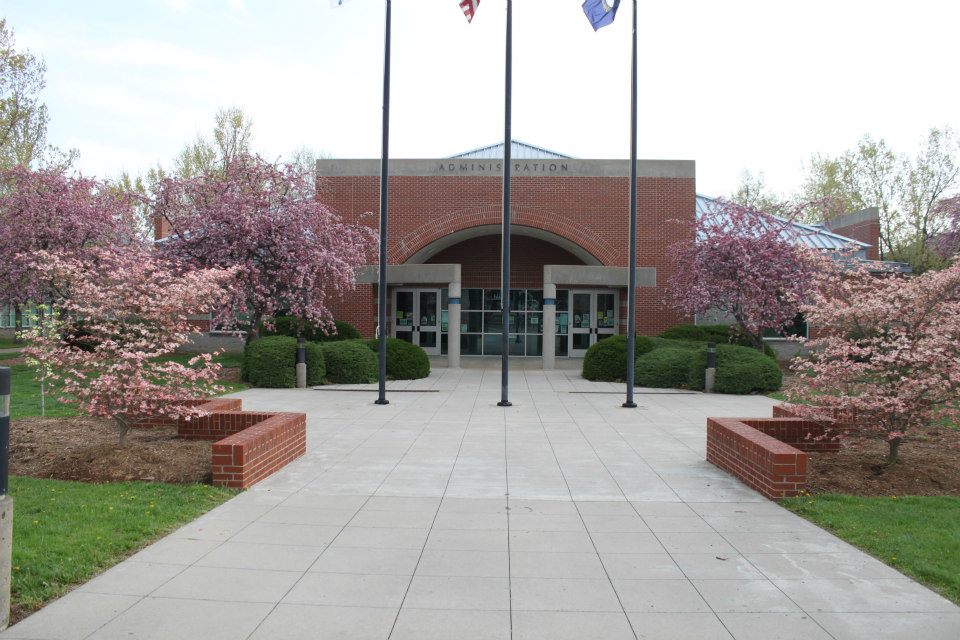
Owensboro CTC Administration Building

OCTC offering program to support students with intellectual disabilities wanting to attend college

OCTC offering program to support students with intellectual disabilities wanting to attend college

Read the original article in the Owensboro Times

Owensboro Times
students working together at a desk

About CTPs

About CTPs

Image of multiple students in caps and gowns, as well as two students in a classroom. The students are both in masks.

Kentucky Comprehensive Transition and Postsecondary Programs for Students with Intellectual Disabilities

Program Brief for Potential CTPs

Comprehensive Transition & Postsecondary Programs

Comprehensive Transition and Postsecondary Programs (CTPs) were created by the Higher Education Opportunities Act (HEOA, 2008) and are designed to support students with intellectual disabilities (ID) who want to continue academic, career and technical, and independent living instruction at an institution of higher education (IHE) in order to prepare for employment.

CTPs are higher education programs for individuals with ID that lead to a meaningful credential. Hallmarks of high-quality programs include (a) the social and academic integration of students with ID with their non-disabled peers, and (b) an individualized person-centered planning process that improves the needed skills and competencies of each student.

A high-quality CTP increases the number of individuals with ID who are academically, practically, and socially prepared to obtain and retain competitive employment in integrated settings and prepares them to live full and independent lives.

What does it mean for students?

Eligible students with ID, as defined by the HEOA, who are enrolled in an approved CTP will have the opportunity to take challenging and meaningful credit and non-credit courses alongside their non-disabled peers and in their chosen fields of study.

Additionally, students enrolled in an approved CTP are eligible for federal and state financial assistance – even if they don’t have a regular high school diploma and are not matriculating toward a degree.

Student Financial Assistance:

Students with ID enrolled in an approved CTP can access federal financial aid for which they qualify and state financial aid from the Kentucky Educational Excellence Scholarship (KEES), Work Ready Kentucky Scholarship, and College Access Program Grant programs, if eligible. Students and families can contact the Kentucky Higher Education Assistance Authority (KHEAA) at (800) 928-8926 or visit kheaa.com for help with the financial aid process.

To learn more about financial assistance for students enrolled in an approved Kentucky CTP, see CTP Brief: Student Financial Assistance.

What does it mean for colleges or universities?

IHEs interested in establishing a CTP must apply to the Federal Student Aid Office at the United States Department of Education (ED). The establishment of an approved CTP enables IHEs to:

  • Provide access to financial aid for students with ID
  • Receive recognition as an approved CTP on the ED website
  • Promote equitable access and success for a population of students conspicuously underrepresented in higher education

There are six approved CTPs in Kentucky:

Additional Information

ThinkCollege, the National Coordinating Center for Transition Postsecondary Programs for Students with ID, has developed a learning module on CTPs. This four-part module discusses requirements for CTPs, preparing to become a CTP, the application submission and review process, and other components to student financial aid eligibility. The module includes a CTP Application Template, a step-by-step checklist, key components from successful CTP applications, as well as other related resources.

Last updated 9/13/2023. To view the latest version of this document, visit www.kshep.hdiuky.org/resources

For more information, please contact:

Johnny W. Collett
Deputy Director
(859) 257-2304
johnny.collett@uky.edu

Home studio podcast interior. Microphone, laptop and on air lamp on the table, close-up

Inclusive Higher Education featured on The State of HDI Podcast

The State of HDI is a podcast exploring initiatives and projects of the University of Kentucky Human Development Institute (HDI).  

In Episode 1, Johnny Collett (HDI Deputy Director) and Erin Fitzgerald (CTP Coordinator) discuss inclusive higher education programs that support students with education and career goals. 

Southeast Postsecondary Education Alliance

Promoting access to quality inclusive postsecondary education for students with intellectual and developmental disabilities through a shared focus on collaboration through program development, resources, research, and public policy in Alabama, Arkansas, Georgia, Florida, Kentucky, Louisiana, Mississippi, Tennessee, North Carolina, South Carolina & beyond!