Skip to content

Category: VR Professionals

  • Next Steps Beyond the CTP Experience, A resource webinar for CTP students, Families and CTP Programs

    Next Steps Beyond the CTP Experience, A resource webinar for CTP students, Families and CTP Programs

    The Kentucky Supported Higher Education Partnership will be hosting an informational webinar on Tuesday, May 26 at 3:00 PM. Next Steps Beyond the CTP Experience, A resource webinar for CTP students, Families and CTP Programs.

    The target audience includes students, parents, and families.

    Webinar Details

    Tuesday, May 26, 2026
    3:00 PM

    Speakers

    Exploring services that pertain to CTP students and families
    Jonathan White – Assistant Director of VR Field Services

    Living independently
    Megan Kuhlwein- Executive Director,  Statewide Independent Living Council

    Competitive integrated employment
    Katie Wolf Whaley – Chair, Kentucky Employment First Council

    Click here to register
  • Kentucky Supported Higher Education Partnership

    Kentucky Supported Higher Education Partnership

    In Kentucky, 19% of students with disabilities, across disability categories, enrolled in a college or university in the year following their exit from high school. For students with an intellectual disability, it was 9%. (2024 Kentucky Post School Outcomes Center)

    The Kentucky Supported Higher Education Partnership (KSHEP) is a network of Institutions of Higher Education across the state offering higher education programs for students with intellectual and developmental disabilities, such as CTP programs.

    Comprehensive Transition and Postsecondary (CTP) programs support students with intellectual disabilities (ID) who want to continue academic or career and technical instruction at an institution of higher education to better prepare for competitive integrated employment and independent living.

    Before 2020, when the Kentucky General Assembly started investing dollars for programslike CTPs, Kentucky had only 3 U.S. Department of Education approved CTP programs. Since 2020, Kentucky has doubled its number of CTPs.

    Application & Enrollment

    164 Applicants

    48% Enrolled

    52% Not Enrolled

    78% of students had paid employment during or at completion of the program

    Program Completion

    36 students have completed their program since 2020

    What programs are saying…

    “Thanks to funding from the KY General Assembly, students in the University of Kentucky’s College and Career Studies program reported many positive experiences, such as continuing theirstudies after high school, exploring career andcommunity opportunities, learning about autonomy and advocacy, and finding and maintaining meaningful social connections.”

    “Through SHEP funding, Murray State’s College to Career Experience program provides a higher education experience for students withintellectual disabilities focused on building skills to improve employment options.”

    “The students in this [BCTC’s Comprehensive Transition and Post-Secondary Program]program are hardworking, loyal and laser focused on gaining skills for today’s workforce. I couldn’t imagine a better set of workers for Kentucky!”

    “Funding for CTP programs, like the SAV-Y program at WKU provides life-changing opportunities for students with intellectual and developmental disabilities by helping them gain the skills, confidence, and independence needed for meaningful employmentand community inclusion.”

    “The funding we receive completely sustains and supports NKU’s SHEP Program. It allow students with intellectual and developmental disabilities to pursue a college experience which gives them opportunities to develop the skills and strengths needed for future employment.”

    “Funding is vital for the continuation of our Career and Life Skills Program at Owensboro Community and Technical College. This program opens doors for students with intellectual disabilities to attend college, build independence, and pursue meaningful careers.”

    QR code to view information on KSHEP website

    Learn more about the programs and their students

    Scan the QR code to the left or visit https://bit.ly/KSHEPsuccess

    The Supported Higher Education Partnership at the University of Kentucky Human Development Institute is funded as the Supported Higher Education Project in the State Executive Branch Budget (July 1, 2024 – June 30, 2026) at $500,000 in each year of the biennium.
  • Strengthening Pathways to College for Students with Intellectual Disabilities

    Strengthening Pathways to College for Students with Intellectual Disabilities

    Think College has released a comprehensive set of resources designed to support vocational rehabilitation (VR) professionals in expanding higher education opportunities for students with intellectual disabilities. These materials highlight the crucial role that VR plays in promoting access to inclusive postsecondary education (IPSE), which in turn leads to increased independence, skill development, and improved employment outcomes.

    The resource hub provides:

    • Foundational Guidance – Fact sheets and FAQs that explain how VR services, including Pre-Employment Transition Services (Pre-ETS), career counseling, and job coaching, align with inclusive college programs.
    • Models of Collaboration – Case studies from states such as Oklahoma and Colorado that demonstrate effective partnerships between VR agencies and higher education institutions to increase access and employment success.
    • Funding and Supports – Information on federal student aid through Comprehensive Transition and Postsecondary Programs (CTPs), as well as details on state and campus-based supports that reduce barriers to participation.
    • Program Quality and Accreditation – An overview of the Inclusive Higher Education Accreditation Council (IHEAC) and its role in promoting high standards for inclusive college programs.

    These resources underscore that VR professionals are not only service providers but also vital partners in shaping equitable futures. By connecting students to inclusive higher education and coordinating the supports needed for success, VR can help ensure that individuals with intellectual disabilities have meaningful opportunities for learning, career development, and full participation in community life.

    Voc Rehab Resources
    Think College

  • Southeast Post Secondary Education Alliance (SEPSEA) will hold its annual conference in Asheville, NC this year from May 21-23, 2025.

    Southeast Post Secondary Education Alliance (SEPSEA) will hold its annual conference in Asheville, NC this year from May 21-23, 2025.

    The SEPSEA logo is a series of circles with an open book in the middle, with bold color pages. Below are three stars and the words Justice, Inclusion, and Advocacy

    The SEPSEA conference is an excellent opportunity to connect with others who are passionate about inclusive postsecondary education programs. You can attend sessions with students, alums, and professionals to learn more about what different people are doing to increase access to learning, engagement, and advocacy in college and university settings.

    If you are not a member of SEPSEA, you can also find out more information about membership – as well as details about this year’s conference – at this link: https://sepsea.org/sepsea-annual-conference/#

  • Watch Now: Rethinking College, a film by Think College

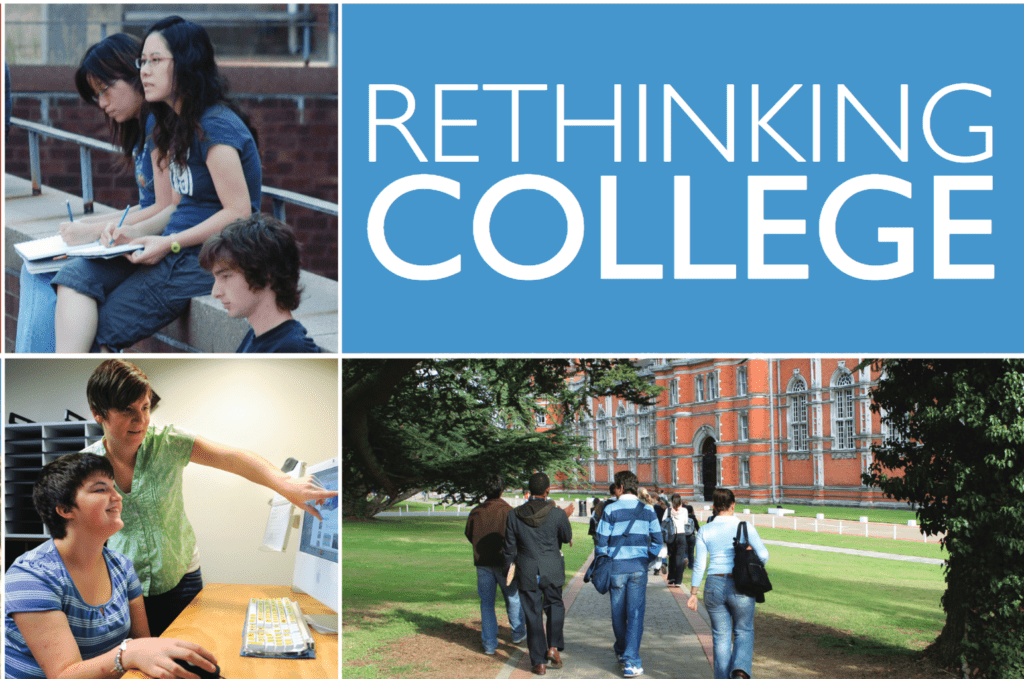
    ThinkCollege teaser includes three images of students with disabilities on campus and the title, Rethinking College in bold white lettering over a blue backgroun.
    Watch Rethinking College now
  • Western Kentucky CTP Approved

    Western Kentucky CTP Approved

    Western Kentucky CTP Approved

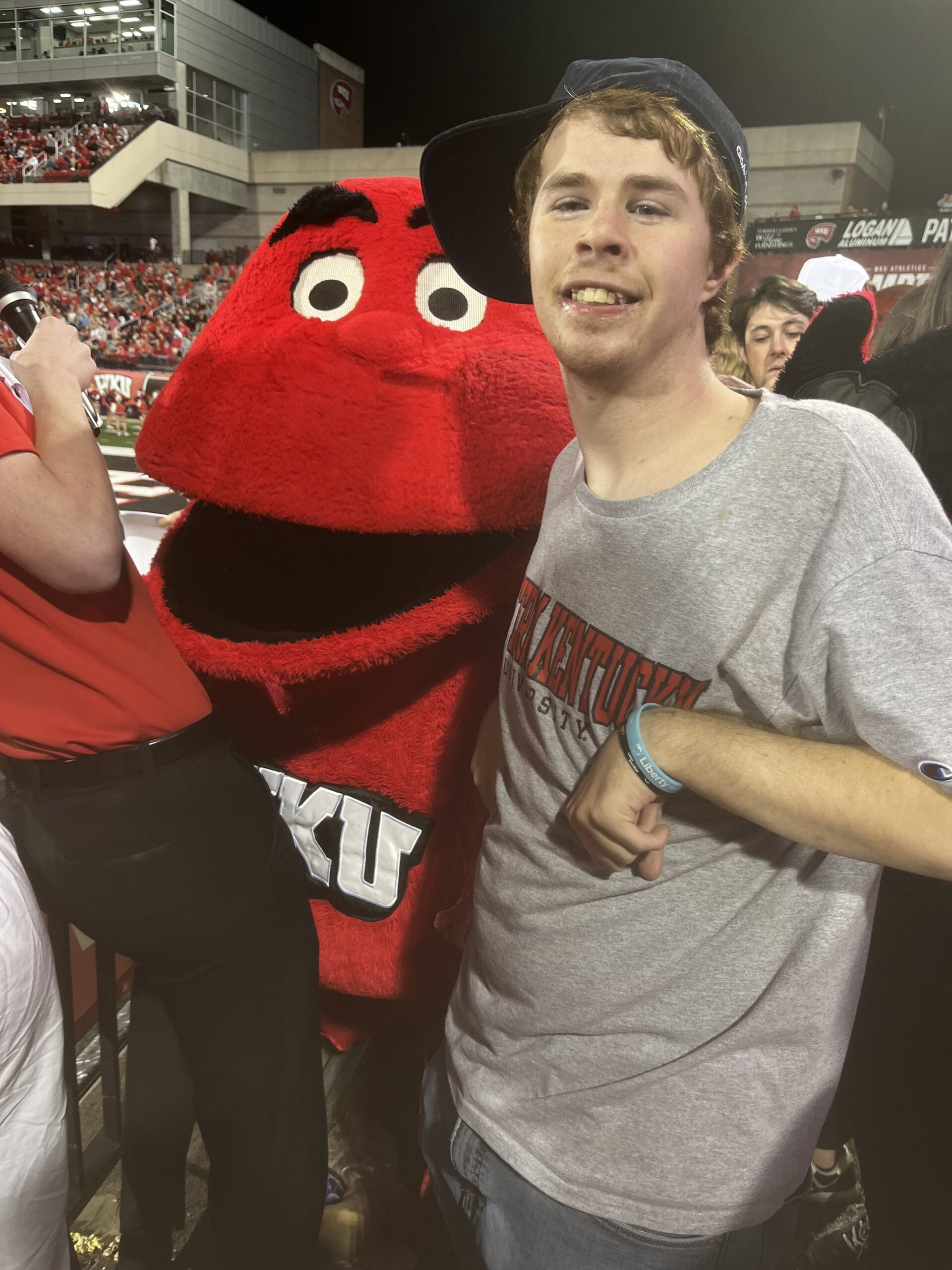
    Western Kentucky University’s application to the US Dept of Ed to establish a CTP has been approved. WKU’s program is the 6th Comprehensive Transition Program that has been approved in the Commonwealth.

    Read More
  • Inclusive Higher Education Timeline

    Inclusive Higher Education Timeline

    Through multiple projects and initiatives over the last 20 years, Kentucky has demonstrated a strong commitment to supporting students with intellectual and developmental disabilities in postsecondary education. The timeline below highlights some of this work.

    2005

    Postsecondary Opportunities Workgroup
    (POW) is launched by families, young adults with intellectual disabilities, and Kentucky organizations.

    2008

    Postsecondary Inclusion Partnership
    PIP begins a three-year grant funded by the Commonwealth Council on Developmental Disabilities.

    2010

    The University of Kentucky Human Development Institute is awarded a five-year $2.1 million federal grant Supported Higher Education Project, SHEP.

    2011

    A pilot between SHEP and the Office of Vocational Rehabilitation provides support services on college campuses around Kentucky.

    2012

    SHEP staff and students with intellectual disabilities present to the Kentucky Legislative Subcommittee on Postsecondary Education.

    A group from Murray State University, led by a parent advocate, expresses interest in starting a program on campus.

    Representative Carl Rollins attends the POW meeting and hears concerns that SHEP students cannot utilize Kentucky Educational Excellence Scholarship Program money.

    2013

    Kentucky’s first U.S. Department of Education approved Comprehensive Transition and Postsecondary (CTP) program was established at Murray State University.

    Kentucky Legislature unanimously passes a bill to allow students with alternate diplomas to access their KEES money.

    2014

    Bluegrass Community & Technical College Comprehensive Transition Program (CTP) program approved.

    SHEP, POW, and stakeholders explore expansion and sustainability options.

    Spalding University Comprehensive Transition Program (CTP) program approved.

    2015

    Northern Kentucky University Comprehensive Transition Program (CTP) program approved.

    2016

    Partnerships in Employment State Systems Change grant.

    Legislative action to increase KEES funding available to students with intellectual disabilities enrolled in Kentucky CTP programs.

    2019

    Inclusive Higher Education Webinar series.

    2020

    Kentucky State Budget addresses Supported Higher Education.

    2021

    Kentucky Supported Higher Education Partnership.

    2022

    University of Kentucky Comprehensive Transition Program (CTP) program approved.

    Legislative action expands the Work Ready Kentucky Scholarship to include students with ID enrolled in Kentucky CTP programs.

    2023

    Owensboro Community and Technical College Comprehensive Transition Program (CTP) program approved.

    2024

    Western Kentucky University Comprehensive Transition program approved.

  • CTP Program Brief: Vocational Rehabilitation (VR) Professionals

    CTP Program Brief: Vocational Rehabilitation (VR) Professionals

    CTP Program Brief: Vocational Rehabilitation (VR) Professionals

    Image of multiple students in caps and gowns, as well as two students in a classroom. The students are both in masks.

    Kentucky Comprehensive Transition and Postsecondary Programs for Students with Intellectual Disabilities

    Program Brief for Vocational Rehabilitation (VR) Professionals

    As vocational rehabilitation professionals, our job is to empower individuals with disabilities to maximize their employment, achieve economic self-sufficiency and independence, and contribute to society. This includes doing all that we can to support the success of eligible consumers with intellectual disabilities enrolled in Kentucky Comprehensive Transition and Postsecondary Programs.
    Cora McNabb, Executive Director, Kentucky Office of Vocational Rehabilitation

    Comprehensive Transition & Postsecondary Programs (CTPs)

    CTPs were created by the Higher Education Opportunity Act (HEOA, 2008). They support students with Intellectual Disabilities (ID) who want to continue academic, career, or technical instruction in higher education to better prepare for competitive integrated employment and independent living. CTPs:

    • utilize person-centered planning to help students identify and explore career goals, which may include paid work and non-paid work-based experiences
    • facilitate the social and academic integration of students on a college campus
    • provide support to navigate all elements of college life, including admissions, coursework, work experiences, and extracurricular activities

    CTP Program Eligibility

    Students enrolled in an approved CTP must have a documented ID, as defined by the HEOA.

    Student Financial Assistance

    Student Financial Assistance:

    Students with ID enrolled in an approved CTP can access federal financial aid for which they qualify and state financial aid from the Kentucky Educational Excellence Scholarship (KEES), Work Ready Kentucky Scholarship, and College Access Program Grant programs, if eligible. Students and families can contact the Kentucky Higher Education Assistance Authority (KHEAA) at (800) 928-8926 or visit kheaa.com for help with the financial aid process.

    To learn more about financial assistance for students enrolled in an approved Kentucky CTP, see CTP Brief: Student Financial Assistance.

    Higher Education and Improved Employment Outcomes

    VR’s mission includes supporting eligible students with ID in obtaining competitive integrated employment and attending inclusive higher education programs such as CTPs.

    A national study of over 9,400 transition age, supported employees with ID served by vocational rehabilitation found that individuals who had completed at least some postsecondary education were more likely to be employed, work more hours, earn more per hour, and were employed in a greater range of vocations (Cimera et al., 2018).

    Another study found that 64% of students with ID who had attended an inclusive higher education program were employed one year after college exit (Grigal et al., 2019).

    Postsecondary education is also associated with increased capacity for growth in independent skills, including increased soft skills and self-determination practice, and with satisfying social lives (Grigal et al., 2021).

    What VR Professionals May Wish to Consider

    As VR Professionals and stakeholders work with eligible and potentially eligible students with ID, they may wish to consider:

    • Would attending a CTP support the student’s employment goal on the IPE?
    • How can VR and local education agency staff increase collaboration and coordination to support the student’s CTP participation?
    • How can VR professionals support student engagement in vocationally relevant services and activities while attending a CTP, in preparation for competitive integrated employment?
    • What are ways VR professionals can inform students and families about higher education options such as CTP programs?
    • How can VR professionals and CTP staff better coordinate opportunities and services for eligible consumers?

    There are six approved CTPs in Kentucky:

    Sources

    Cimera, R., Thoma, C., Whittenburg, H., & Rohl, A. (2018). Is getting a postsecondary education a good investment for supported employees with intellectual disability and taxpayers? Inclusion, 6 (2), 97- 109.

    Grigal, M., Hart, D., Papay, C., Smith, F., Domin, D. & Lazo, R. (2019). Year Four Annual Report of the TPSID Model Demonstration Projects (2018–2019). Boston, MA: University of Massachusetts Boston, Institute for Community Inclusion.

    Grigal, M., Dukes,L.L., Walker, Z. (2021). Advancing Access to Higher Education for Students with Intellectual Disability in the United States. Disabilities. 2021; 1(4):438-449.

    Last updated 5/19/2023. To view the latest version of this document, visit www.kshep.hdiuky.org/resources

    For more information, please contact:

    Johnny W. Collett
    Deputy Director
    (859) 257-2304

    johnny.collett@uky.edu

  • Inclusive Higher Education featured on The State of HDI Podcast

    Inclusive Higher Education featured on The State of HDI Podcast

    The State of HDI is a podcast exploring initiatives and projects of the University of Kentucky Human Development Institute (HDI).  

    In Episode 1, Johnny Collett (HDI Deputy Director) and Erin Fitzgerald (CTP Coordinator) discuss inclusive higher education programs that support students with education and career goals. 

  • Southeast Postsecondary Education Alliance

    Promoting access to quality inclusive postsecondary education for students with intellectual and developmental disabilities through a shared focus on collaboration through program development, resources, research, and public policy in Alabama, Arkansas, Georgia, Florida, Kentucky, Louisiana, Mississippi, Tennessee, North Carolina, South Carolina & beyond!